Why does overnight charging matter so much on SDG&E time-of-use rates?
San Diego Gas & Electric, known locally as SDG&E, sells electricity on time-of-use schedules where the clock changes the bill more than the charger does. Its EV-TOU-5 schedule is built for households with an electric car, with a super off-peak window in the overnight hours and a much higher on-peak window in the late afternoon and early evening, roughly 4 p.m. to 9 p.m. Weekends stretch the cheaper window longer into the morning. A level 2 charger installer San Diego homeowners trust will talk about this schedule before talking about hardware, because a timer set wrong can erase the savings home charging should bring.
Most wall units and most cars let you schedule a start time or a departure time. Set the car to begin after the evening peak ends and finish before you leave for work on Interstate 5 or Interstate 15. If your home also has rooftop solar, which is common from Scripps Ranch to Rancho Bernardo, ask about the midday super off-peak window that appears on weekdays. Charging while your panels produce can be another useful window, though overnight remains the simple habit for most families.
- Program the charger or the car, not your memory — automatic schedules beat nightly reminders.
- Keep heavy home loads, like laundry and dishwashers, out of the same evening window when you can.
- Ask SDG&E which EV schedule fits your household before the install, since the whole house may move to that rate.
- Recheck the schedule after rate updates, because time windows and seasons can shift.
None of this requires a special charger brand. It requires a correct circuit, a charger that supports scheduling or a car that does, and a short conversation about how your household uses power after dinner.
What permit does the City of San Diego require for a 240-volt charger circuit?
The City of San Diego Development Services Department treats an electric vehicle charging station as electrical work that needs an electrical permit. Its Information Bulletin 187 lays out the process for charging stations on an existing site or building. Equipment must be listed and labeled by a nationally recognized testing laboratory. For a house, duplex, or townhome garage, many projects qualify for the simpler permit path, where a circuit card for a single-family dwelling, form DS-1779, can stand in for full electrical plans and carries the load calculation.
That load calculation is the heart of the paperwork. It shows how much capacity your panel already uses and how much room remains for a continuous charging load. Older homes in Clairemont, La Mesa, and parts of South Bay sometimes have smaller services or crowded panels, so the calculation decides whether you can add the circuit directly, use load management, or need a panel change first. County homes outside city limits follow San Diego County rules, which also require an electrical permit and a final inspection for a Level 2 circuit.
After the work, an inspector checks wire size, breaker size, grounding, and the charger mounting. Keep the passed inspection record with your home papers. It helps with insurance questions and with a future sale, and it proves the circuit was not a handyman shortcut. A permit also matters if you later need ev charger repair San Diego service, because a repair tech can read the circuit card and know exactly what was approved.
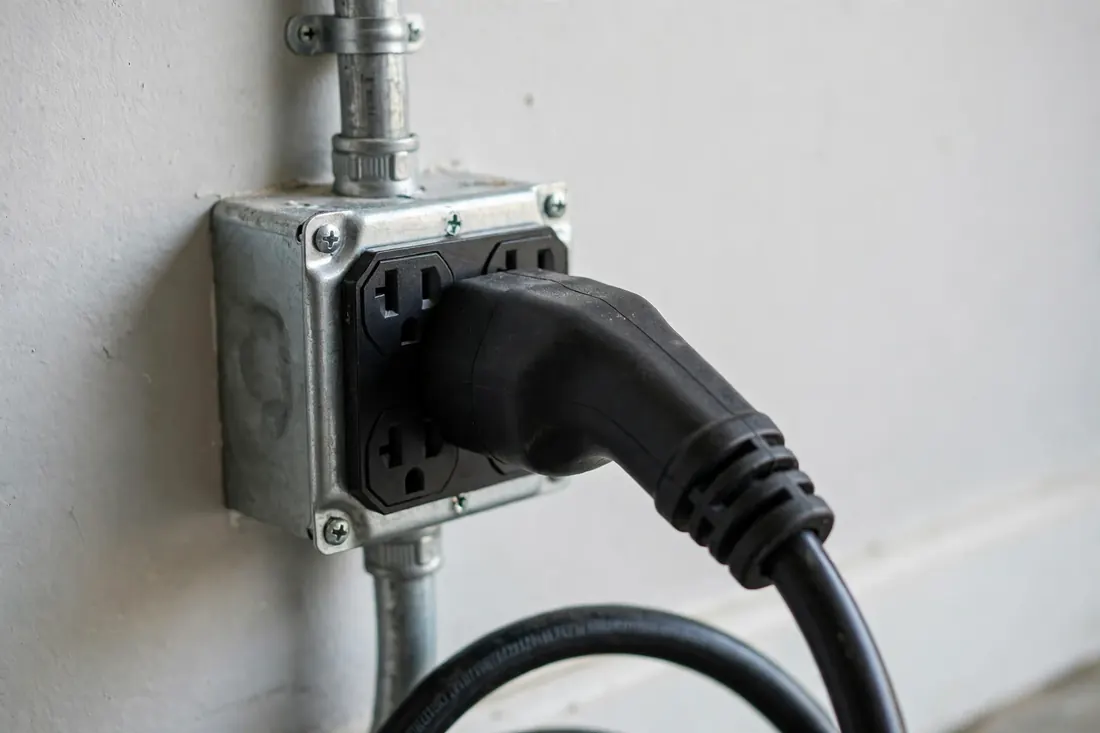
How does salt air change an outdoor install near the beach?
San Diego looks gentle, but the coast is hard on metal. Neighborhoods within a few miles of the water — La Jolla, Pacific Beach, Ocean Beach, Point Loma, Del Mar, and Coronado — breathe salt spray every day. On an outdoor charger, that spray works into conduit fittings, receptacle boxes, screws, and cable ends. A charger that would last for years in Mira Mesa can show rust and green corrosion much sooner in a beach ZIP code if standard indoor-grade parts are used outside.
For a driveway or side-yard install near the coast, ask for these details in writing:
- Weather-rated enclosure and sealed conduit entries, with fittings made for wet locations.
- Stainless or corrosion-resistant fasteners and mounting hardware.
- A receptacle rated for electric vehicle use and for outdoor duty if you choose a plug-in unit, or a hardwired unit that removes the plug connection entirely.
- Cable storage that keeps the connector off the ground and out of sprinklers.
Inside a garage, salt air matters less, though a garage that stays open to ocean breeze still benefits from tidy, sealed connections. Wherever the charger sits, leave clearance around it, keep the cable loop loose instead of kinked, and wipe down outdoor hardware during your normal home upkeep. Small habits protect the connection points where heat and resistance would otherwise build up.
Can a condo or townhome owner in San Diego install a charger over an HOA objection?
California gives owners in common interest developments a real legal footing. Civil Code section 4745 says a provision in an association governing document is void and unenforceable if it effectively prohibits or unreasonably restricts installing or using an electric vehicle charging station in an owner's unit or designated parking space. That protection reaches deeded spaces and exclusive-use common area spaces assigned to a unit.
The right is not a free pass to skip paperwork. An association may impose reasonable restrictions — conditions that do not significantly raise the cost of the station or significantly lower its efficiency or performance. In practice, boards often ask for an application handled like an architectural change, a licensed contractor, proof of insurance, and compliance with building and safety codes. You, as the owner, generally carry the cost of the install, the electricity you use, upkeep, and repair of any damage linked to the equipment.
Timing matters too. If the association requires approval, submit a complete packet: site sketch, panel location, proposed wire route, charger listing sheet, contractor license, and insurance certificate. Under the statute, if the association does not deny the application in writing within the set response window, the application is treated as approved, unless the delay came from a reasonable request for more information. Keep copies of everything you send and the dates you sent it.
What about SDG&E help for apartments and condos?
SDG&E ran a Power Your Drive effort for apartments and condos that offered rebates for shared charging at multi-family sites. The utility page for that program states it is fully subscribed and is no longer accepting applications. Do not plan a condo project around money from a closed intake. Ask SDG&E and the property manager what is open today for multi-family sites, and get any answer in writing before the board votes.
What should renters in San Diego know before asking a landlord?
Renters have a different path from owners. California law also addresses charging in rental housing, and many landlords will consider a request when the tenant pays for the work, uses a licensed electrician, restores the parking area if they move, and carries the required insurance. The strongest request is written and specific: where the charger would go, how power reaches it, who pulls the City of San Diego permit, and how usage will be metered or paid for.
Single-family rentals in places like Tierrasanta or University Heights are often simpler because the panel and driveway belong to one household. Apartment complexes in Mission Valley or along Friars Road are harder, since parking is shared and panels may sit far from the stall. In those buildings, a shared Level 2 station managed by the property, or a charger placed near the electrical room, may be more realistic than a private unit at every stall. If a private install is not possible now, ask whether the property plans shared charging and get on that list in writing.
If you are searching ev charger installer near me while renting, bring the landlord's written permission to the first site visit. An installer cannot size a circuit in a building you do not control without knowing who approves panel access and trenching.
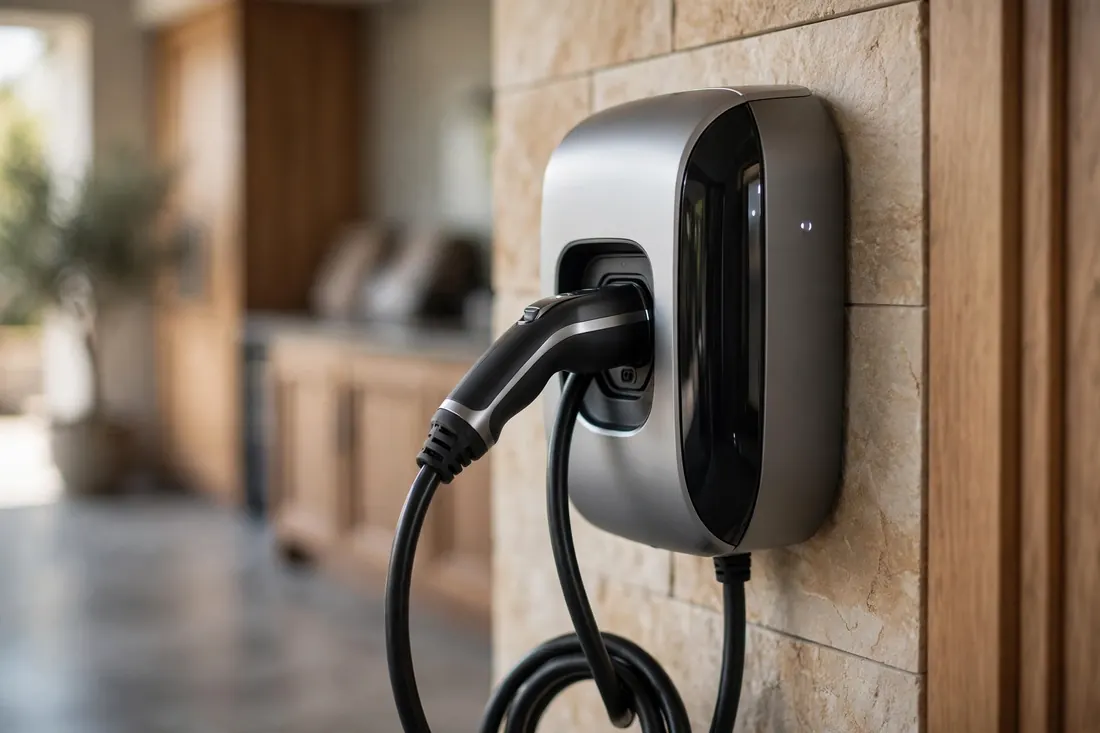
How do you size a charger for a San Diego commute?
Start with miles, not with the biggest number on a box. A driver crossing the county from Oceanside to downtown, or from Eastlake to Torrey Pines, uses more energy each day than a driver who stays within a few neighborhoods. Level 2 charging adds miles of range steadily through the night, so even a mid-size circuit covers most daily driving when the car sits for eight to ten hours. A larger circuit helps households with two electric cars, long freeway commutes, or late returns and early departures.
Your installer should do a load calculation under the electrical code, look at the distance from panel to parking, and ask about future plans. A second EV, a heat pump water heater, or an accessory dwelling unit — very common in San Diego backyards — can change what the panel should support in two years, even if today looks simple. Planning conduit size and panel space now is far easier than reopening walls later.
Think about placement as a daily habit. Mount the unit so the cable reaches the charge port without crossing a walkway where guests will trip at night. In a tandem garage, common in newer townhomes, decide which car parks in front most nights and place the charger for that car first. For a driveway install, keep the connector within reach of the port when the car is backed in, since many drivers back into San Diego driveways on sloped lots in Kensington and North Park.
What does commercial ev charging San Diego planning involve?
Commercial ev charging San Diego projects — offices in Sorrento Valley, retail centers, hotels near the Gaslamp Quarter, and fleet yards — follow a different track from a home garage. The site host must think about how many drivers arrive at once, how long they stay, who pays for the energy, and how the stations stay available instead of blocked by one car all day. Level 2 fits workplaces and hotels where cars dwell for hours. Faster charging fits travel stops and fleets that turn vehicles quickly, but it needs far more electrical capacity and utility coordination.
State and regional incentive projects for public and workplace charging have opened and closed over the years. The San Diego County Incentive Project under the California Electric Vehicle Infrastructure Project, known as CALeVIP, supported Level 2 and fast charging at eligible business and public sites, and its project page now says it is no longer accepting applications, while pointing applicants toward other CALeVIP opportunities. Treat any incentive as a moving target: confirm open funding, reserve funds before buying equipment when the program requires it, and do not start construction on the promise of a program that has paused intake.
Workplaces should also plan signage, lighting, accessible spaces, network service, and upkeep from the start. A station that is cheap to install but hard to find in a dark garage corner will sit unused. Put chargers where drivers already park, publish simple rules for your staff, and assign one person to report faults quickly so a broken unit does not stay broken for a season.
When should you call for ev charger repair San Diego help?
Call for service when a charger trips its breaker more than once, shows a fault light that does not clear after a reset in the manual, has a damaged cable or connector, runs unusually hot at the plug, or stops mid-session again and again. In coastal homes, add one more warning sign: white or green buildup on metal parts, or a receptacle that feels loose when you insert the plug. Corrosion raises resistance, and resistance makes heat.
Do not keep resetting a breaker to force a charge before a trip. A breaker that trips under a continuous load is telling you something about the circuit, the receptacle, or the charger. A repair visit usually starts with the panel schedule and the original permit record, then moves to torque on connections, condition of the receptacle or hardwired splice, and the charger's own fault history if it keeps a log.
Many faults turn out to be simple: a worn plug-in receptacle that was not rated for daily EV cycles, a loose neutral, or a ground fault device that conflicts with the charger's own protection. Others point to a charger reaching the end of its service life outdoors. Either way, keep the car unplugged from a suspect circuit until it is checked, and use a public station for a day rather than risk a hot connection overnight in an attached garage.
Ready to sort out a garage, condo, or workplace plan for your block? Call Now and describe your parking, your panel location, and your utility schedule questions — that short call shapes the whole design.
Level 1 vs Level 2 Charging: Which Fits Your Life?
Both levels charge at home, but they fit different lives in San Diego. Level 1 uses a standard household outlet and the cord that often comes with the car. Level 2 uses a dedicated 240-volt circuit installed by an electrician. Here is how they compare for local drivers.
- Uses an existing 120-volt outlet, so no new circuit or city permit is added for the outlet itself
- Adds range slowly, which can work for short trips around your own neighborhood
- Struggles to refill a long Oceanside-to-downtown commute overnight
- Can leave a driver dependent on public chargers during busy weekends
- Shares an outlet circuit with other loads, so placement choices are limited
- Dedicated 240-volt circuit sized for continuous charging, with a city electrical permit and inspection
- Refills most daily San Diego driving during SDG&E super off-peak overnight hours
- Supports scheduling, so charging starts after the evening peak without you staying up
- Works in a garage, carport, or permitted outdoor spot with weather-rated hardware
- Gives two-EV households and future ADU plans a stronger electrical foundation
EV Charger Services in San Diego, CA
Also Serving Drivers in Nearby Metros
Driving between metros? These nearby city guides follow the same research standard:
EV Charger Installation in Los AngelesEV Charger Installation in PhoenixEV Charger Installation in Las Vegas