Where will the charger live? Rain, alleys and detached garages come first
Start with geography, because Seattle homes park in creative places. Many houses in Fremont, Phinney Ridge and Greenwood have a detached garage reached from an alley. Others in West Seattle or Beacon Hill rely on a carport or an open driveway on a slope. Each layout changes the wiring route, the conduit protection, and whether the charger sits indoors, under a roof edge, or fully exposed to weather.
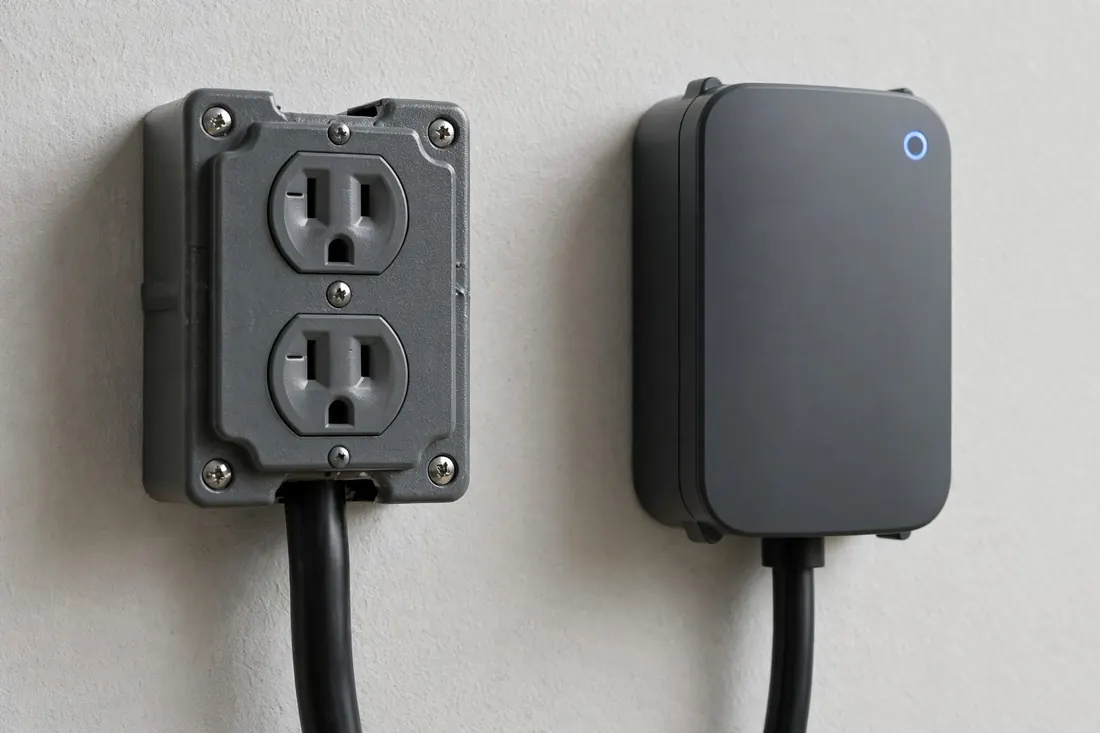
Outdoor equipment here needs to be rated for wet locations, mounted so the cable can hang in a loose loop off the ground, and placed where standing water and leaf buildup will not sit against it all winter. A hardwired unit removes one plug connection from the damp, which is why many installers lean that way for exposed spots, while a plug-in outlet in a dry garage keeps the flexibility to move the charger later.
Think about snow-free but slick surfaces too. You will plug in on dark, rainy evenings for months at a time. A small light near the charger, a cable length that reaches without stretching across a walkway, and a holster at a comfortable height matter more in daily Seattle use than any app feature.
Older Seattle homes: what a load calculation reveals about a 100-amp service
Seattle housing stock is full of early-1900s homes in Capitol Hill, the Central District and Madrona, plus post-war houses across Northgate and Rainier Valley. Many still run on smaller electrical service, and some carry layers of older wiring work from different eras. A Level 2 charger is a continuous load that can run through the night, so an installer cannot judge capacity by counting empty breaker slots.
A proper load calculation adds up heating, cooking, water heating, laundry and the proposed charger, then compares the total with what your service can safely carry. Owners swapping stories on r/evcharging describe a familiar pattern: one quote demands a full service upgrade on sight, while a second electrician runs the numbers and finds a managed or lower-rate charger fits the existing service. Both outcomes happen in Seattle. The difference is whether anyone did the math for your house.
- A charger set to a moderate rate often covers overnight needs on an older service.
- A load-management device can pause charging while the dryer or range is running, then resume.
- A genuine service upgrade makes sense when the home is adding several large electric loads, not just one car.
If knob-and-tube wiring or an outdated panel shows up during the assessment, your electrician should say so plainly and separate that safety work from the charger work, so you can decide with clear information.
How does the SDCI permit process work, and when does City Light get involved?
An electrical permit is required for a Level 2 install in Seattle. Permits are handled by the Seattle Department of Construction and Inspections, known as SDCI, and the finished work is inspected by the city. Local guidance describes many straightforward single-family charger jobs as permit, install, then a single SDCI inspection.
The path grows an extra step when the job includes an electrical service upgrade. In that case Seattle City Light must check and approve the new service configuration, and both an SDCI electrical inspector and a City Light Electric Service Representative need to sign off before the project counts as finished. That coordination has to start at the beginning. Homeowners and electricians who treat City Light as an afterthought are the ones whose projects stall with a charger on the wall and no final approval.
Structural changes can add a separate building permit on top of the electrical one, for example when walls, parking areas or conduit routes are altered in ways the electrical permit does not cover. Your installer should map out which permits your specific job needs during the site visit, and who schedules each inspection, before any wire is pulled.
What incentives can a Seattle homeowner actually claim right now?
Here is the honest version, because older web pages still describe programs that have changed. Seattle City Light does not currently offer a rebate for a single-family home Level 2 charger, according to current local utility summaries and installer guidance that tracks the utility. If a quote leans on a City Light home charger rebate to make its numbers work, ask for the current program page in writing.
Where City Light money does flow is toward shared charging. Its Multifamily EV Charging Program supports apartment and condo properties, with applications handled through the utility, free site assessments, and incentives that depend on whether a property is affordable or market-rate and on project type. Its Public Charging Incentive Program supports publicly accessible charging, and the utility also runs curbside Level 2 charging in dense neighborhoods where many residents have no driveway at all.
At state level, the Washington State Department of Commerce runs the Washington Electric Vehicle Charging Program, which funds multifamily, publicly accessible, fleet and workplace charging through competitive rounds rather than a household rebate you claim after a garage install. A recent round was a large statewide funding pool for those shared project types, with applications handled by agencies, utilities, nonprofits and private entities. For a single-family homeowner, the practical takeaway is simple: budget your home ev charger installation in Seattle on its own merits, and treat any future household program as a bonus if one opens while your project is underway. The old federal home charging credit has ended, so do not let anyone build it into your plan.
Hills, street parking and the curbside question
Seattle terrain shapes charging in ways flat cities never face. A charger for a home on a Queen Anne or Magnolia slope may sit well above or below the panel, with conduit following retaining walls and stairs. Cable reach needs checking against how the car actually parks on the grade, nose-in or backed in, because a cord that barely reaches on a level test will annoy you every wet night.
Many Seattle residents, especially renters and condo owners around Capitol Hill, First Hill and the University District, have no private parking at all. For them, City Light's curbside Level 2 stations, placed in residential areas where requests cluster, are part of the local charging picture, alongside workplace and public charging. If that is your situation today, home installation may not be an option yet, but knowing the programs exist helps you ask a landlord or association the right questions.
For homeowners adding a driveway charger on a hill, also plan for drainage. Conduit entries should be sealed, the unit should not sit where roof runoff pours directly onto it, and the parking pad approach should stay safe to walk when leaves make the slope slick in November.
Condos and HOAs: what Washington's right-to-charge law gives you
Washington has a strong right-to-charge framework for unit owners. Under state law for common interest communities, an owners association may not adopt or enforce a rule that effectively prohibits or unreasonably restricts installing or using an EV charging station for a unit owner's personal use within their unit or designated parking space. Associations can impose reasonable restrictions, and they can require an application handled much like an architectural modification request.
Two details from the Washington summary published by Plug In America are worth knowing before you apply. The association's decision should come in writing, and if an application is not denied in writing within the period set in the statute, it can be treated as approved. The law also limits fees an association can charge around charger placement. Keep copies of everything you submit, with dates.
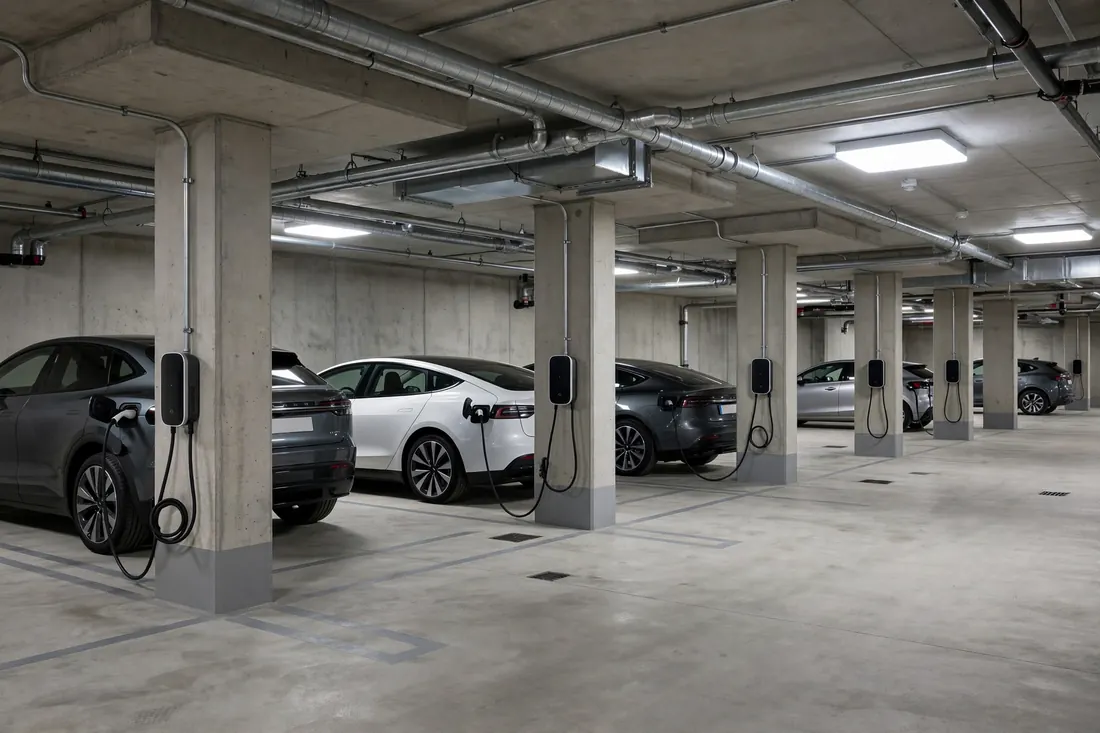
Shared buildings still have real engineering questions: capacity on a common panel, how your charging electricity gets metered, and who maintains the equipment. Seattle City Light's multifamily program exists partly for this reason, and a building that plans several chargers at once usually reaches a better answer than owners wiring one space at a time. If you need ev charger repair in Seattle for an association-owned shared station, that maintenance responsibility should be written into the building's plan from day one.
Workplace and commercial charging around Seattle
Commercial ev charging in Seattle ranges from a pair of ports behind a Ballard workshop to larger arrays for fleets and office parking near South Lake Union. These projects live under commercial permitting, often need detailed plan approval rather than a simple over-the-counter electrical permit, and should be designed around dwell time: employees parked all day need different capacity planning than customers parked for an hour.
State funding rounds through the Department of Commerce have targeted exactly these workplace, fleet and public projects, and City Light's public charging incentives add another route for sites that serve the wider public. Building owners should check which program window is open before finalizing a design, because eligibility rules, equipment lists and application timing differ between them, and retroactive applications are generally not accepted by the multifamily program once construction is finished.
For small businesses, a modest, well-placed set of chargers with clear signage and a simple access policy usually beats an oversized install that strains the building service. Start with how many vehicles, parked how long, and grow from there.
Damp-climate faults: when to seek EV charger repair in Seattle
Moisture finds weak points. The repair calls that repeat in this climate involve corroded or loose connections in outdoor outlets, water intrusion in a junction box that was not sealed for a wet location, nuisance ground-fault trips that grow more frequent over a wet season, and cables damaged by being driven over in a tight alley garage.
If your charger trips only when it rains, say that on the call. That pattern points a technician toward the outdoor parts of the circuit instead of the vehicle. Likewise, mention flickering, a warm outlet face, or a breaker that feels hot; those are stop-and-check signs, not quirks to live with through winter.
A repair visit for ev charger repair in Seattle should end with the cause named in plain language: vehicle side, charger side, circuit side or panel side. That clarity matters if the station is under its maker warranty, because the paperwork path differs for each cause, and your SDCI permit record helps show the install was done properly in the first place.
Thinking about a new install instead? If you arrived here by searching for an ev charger installer near me, start local: Call Now with your neighborhood, your panel size if you know it, and where the car parks. Those three details tell a Seattle installer most of what the first visit needs to confirm.
Level 1 vs Level 2 Charging: Which Fits Your Life?
Seattle drivers often start with the portable cord because it came with the car. The comparison below is about daily life in a rainy city, not just speed on paper.
- Plugs into an ordinary outlet, so it suits a temporary or rental situation
- Adds only a few miles of range per hour, which a long commute can outrun
- A cord crossing a wet driveway or garage floor is a daily trip and wear point
- Shares a general circuit that may also feed lights, tools or a freezer
- Cannot take part in managed or scheduled charging programs the way a dedicated unit can
- Dedicated 240-volt circuit installed for continuous overnight charging
- Refills a typical day of Seattle driving during one night at home
- Hardwired option removes a plug connection from damp outdoor locations
- Mounts on a wall or post with a holster, keeping the cable off wet ground
- Load management lets it share an older home's limited service more gracefully
EV Charger Services in Seattle, WA
Also Serving Drivers in Nearby Metros
Driving between metros? These nearby city guides follow the same research standard:
EV Charger Installation in PortlandEV Charger Installation in Los AngelesEV Charger Installation in San Diego