Start With Your Driving, Not With Hardware
The most useful first question is not which charger to buy. It is how many miles you add back on a normal night. A commuter who drives a short distance and parks for ten hours needs far less power than a driver covering long distances who arrives home late and leaves early. Write down your typical daily miles, your longest regular day, and how long the car sits at home. Those three numbers shape every later decision.
Owners on forums such as r/evcharging often discover that a modest charging rate covers their routine comfortably, because the car charges for many more hours than it drives. Others learn the opposite: weekend trips and shift work leave too little parked time for a slow setup. Being honest about your pattern prevents two common mistakes, paying for capacity you never use and installing a setup that leaves you short on busy weeks.
Also think about household change. A partner may switch to an electric vehicle, a teenager may start driving, or a plug-in hybrid may join the garage. You do not need to build everything today, but noting those possibilities helps your installer place conduit and panel space with the future in mind.
Choosing Where the Charger Lives in Your Home
Placement is a daily-life decision as much as an electrical one. Inside a garage, the unit stays sheltered, cables stay cleaner, and the walk from car to door is short in bad weather. On an exterior wall or a pedestal near a driveway, the charger serves cars that never enter the garage, which suits homes where the garage holds tools, storage, or a workshop.
Walk the route you will take with the cable every evening. The connector should reach the charge port without stretching across a walkway, pinching under a garage door, or lying where tires roll over it. Notice which side of the car the port is on and how you normally park, nose in or backed in. A few minutes of rehearsal now prevents years of small annoyances.
Distance from the electrical panel matters too. A charger mounted on the same wall as the panel usually means a shorter wiring run, while a detached garage or a far driveway adds conduit, possible trenching, and more planning. Your installer will balance convenience against that distance during the site assessment.

What Happens During a Home Assessment Visit
A proper home ev charger installation starts with an assessment, not with drilling. The installer looks at your main panel, notes the service size on the main breaker, and lists the large appliances already connected, such as the range, dryer, water heater, and air conditioner. They also check for open breaker spaces and signs of age or heat damage inside the panel.
Next comes a load calculation under NEC Article 220, the part of the National Electrical Code that estimates how much demand a home places on its service. For existing homes adding a load, the optional method in NEC 220.83 is often used. It counts the first portion of general loads in full and applies a demand factor to the rest, because not every appliance runs at once. The result tells the installer whether your service has room for charging as planned.
Finally, you walk the cable route together. Expect questions about wall materials, attic or crawl space access, and where you want the connector holster. Good installers photograph the panel and the route, then explain the plan in plain language before any permit paperwork begins.
Permits and Inspections for a House Installation
Most cities and counties require an electrical permit for a new 240-volt charging circuit, and the finished work is checked by a local inspector. The permit application usually describes the charger, the circuit size, and the load calculation. Some jurisdictions issue simple residential permits quickly online, while others examine plans over days or weeks, so timing differs across the country.
The inspection is a short visit after installation. The inspector verifies wire size, breaker size, grounding, labeling, and that the equipment is listed for vehicle charging. NEC Article 625, the section devoted to electric vehicle charging systems, is the reference behind most of these checks. Passing inspection closes the permit and creates a record that the work was checked.
Skipping the permit can cause trouble later. Homeowners discussing sales and insurance on owner forums regularly warn that unpermitted electrical work can complicate a home sale or an insurance claim. Rules vary locally, and some rural areas have different processes, so ask your building department what applies at your address before work begins.
Hardwired or Plug-In: Picking a Connection Style at Home
Home chargers connect in one of two ways. A hardwired unit is joined directly to the circuit wiring inside a junction arrangement, with no outlet in between. A plug-in unit connects through a heavy-duty 240-volt receptacle, commonly the NEMA 14-50 style used by ranges and dryers, which lets you unplug and move the unit later.
Hardwired connections support the higher charging rates, remove one connection point that can wear or overheat, and suit permanent outdoor locations. Plug-in connections offer flexibility if you move house, rent the property, or want to swap equipment without opening wiring. Electricians generally note that receptacles for vehicle charging need ground-fault protection under recent code editions, and that not all receptacles are built for daily plug cycles and sustained current, so the outlet grade matters.
Neither style is right for every home. If the charger will stay for a decade beside the same parking spot, hardwired is often the calmer choice. If your housing situation may change, the plug-in route keeps options open. Your installer can explain which fits your panel and plans.
Planning for Two Vehicles and Guests
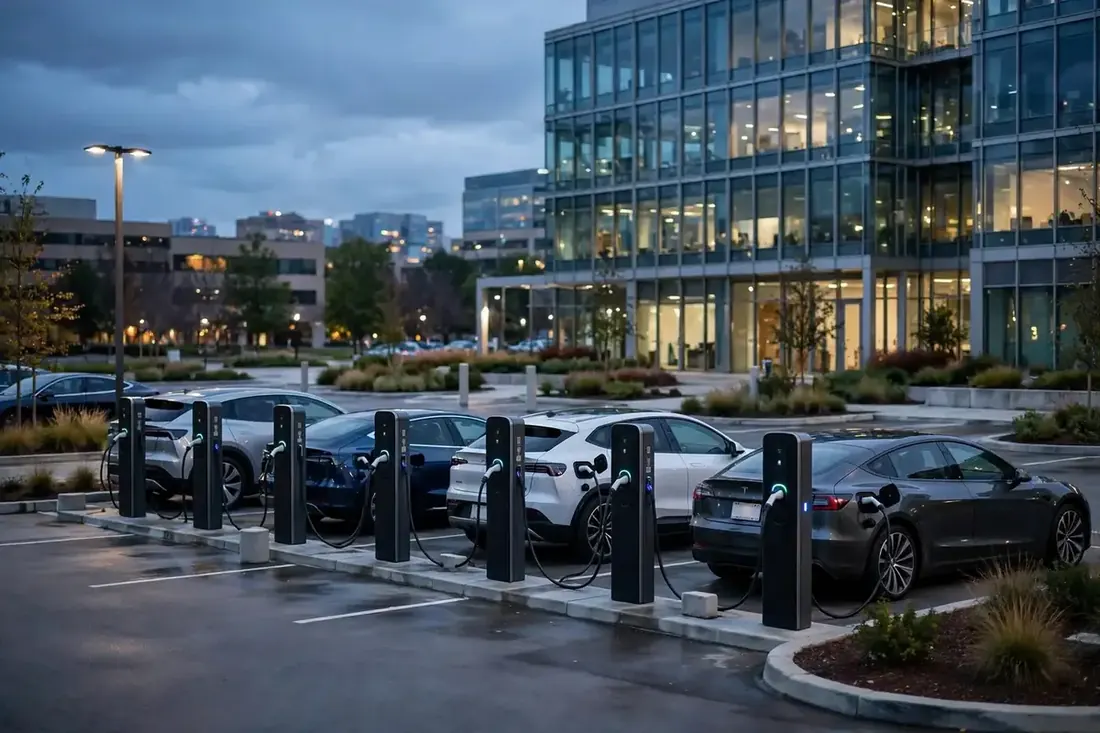
Many households add a second electric vehicle sooner than expected. Planning for that day during the first home ev charger installation can be as simple as running slightly larger conduit, leaving panel space, or choosing equipment that can share one circuit. Some listed systems let two units divide available power, charging both cars more slowly when both are plugged in and giving full speed to a single car.
NEC Article 625 recognises load management between multiple charging units, so a shared arrangement can be code compliant when the equipment is listed for it and set up correctly. Ask your installer to note the managed limit on the panel label so a future electrician understands the design.
Guests and visiting family are a smaller version of the same question. A charger placed where a visitor can reach it, without blocking your own car, makes holiday parking simpler. If you rent out part of the property, discuss metering early, because knowing who used the electricity avoids awkward conversations later.
Living With Home Charging: Habits That Help
Once installed, home charging settles into a routine. Most owners plug in on arrival and let the car or the charger delay the session until off-peak hours, where their utility offers time-based rates. Check your own utility plan, because rate structures differ widely and some offer specific vehicle charging plans worth enrolling in.
Small habits protect the equipment. Coil the cable loosely instead of winding it tight, hang the connector in its holster so the contacts stay clean and dry, and keep the area around the unit clear so air can move. In winter, a cable stored off the frozen ground stays flexible longer. In hot climates, shade for an outdoor unit reduces heat stress during afternoon sessions.
Every few months, look over the cable jacket for cuts, check that the connector latch still clicks firmly, and confirm the breaker has not tripped unnoticed. If anything looks scorched, smells odd, or feels unusually hot, stop using the unit and have it checked. Our repair and replacement page explains those warning signs in detail.
How City Pages Connect to This National Guide
Charging equipment is national, but permits, utility programs, and inspection habits are local. That is why this site pairs this overview with city pages for major metros. Reading about ev charger installation in Houston, for example, adds the local permit office details and utility context that a nationwide page cannot carry, while a reader comparing ev charger installation in Phoenix gets desert heat considerations for outdoor equipment.
Use this page to understand the decisions, then use your city page to understand the paperwork and timelines near you. If your metro is not listed yet, the process described here still applies in outline: assessment, load calculation, permit, installation, inspection, and a first supervised charge.
When you are ready, Call Now to discuss your home. Bring your daily mileage, a photo of your panel label if you have one, and a note of where the car parks. Those three items let an installer give you a useful answer quickly.
Questions to Ask Before You Sign Anything
Before agreeing to work, ask who pulls the permit and schedules the inspection, and confirm the answer is part of the service. Ask which NEC edition your jurisdiction has adopted, because requirements such as ground-fault protection for receptacles have changed between editions. Ask how the load calculation came out and what it assumed about your appliances.
- Will the circuit be dedicated to charging only, with its own breaker?
- Is the equipment listed by a recognised testing laboratory for vehicle charging?
- What happens if the inspector requests a correction?
- Can the installation be expanded later for a second vehicle?
- Who do I contact if the charger shows a fault light next month?
Clear answers to these questions signal a careful installer. Vague answers are a reason to pause, whatever the schedule pressure. Your home electrical system will carry this load for hours each night, so the quality of these answers matters more than a fast start date.
Seasonal Routines: Summer Heat and Winter Mornings
Home charging changes slightly with the seasons, and planning for that during installation pays off. In hot regions, an outdoor unit on a sun-baked wall works hardest in the late afternoon, exactly when many drivers arrive home. A shaded mounting spot, or a habit of scheduling the session for later in the evening, keeps equipment cooler and can reduce the protective slowdowns that heat sometimes triggers.
Winter brings the opposite pattern. Cars use extra energy for cabin and battery heating, so nightly miles effectively cost more charge than the odometer suggests. Drivers in cold states often raise their daily charge limit slightly in winter and plug in immediately on arrival, while the battery is still warm from driving, because a warm battery accepts charge more readily than one left to soak in the cold for hours.
Storm seasons add a third routine. After an outage, check that the charger restarted cleanly and that any schedule you rely on survived the interruption. If outages are frequent in your area, mention it during installation, since surge protection for the charging circuit is a conversation worth having with your electrician before the first storm tests the setup.
Level 1 vs Level 2 Charging: Which Fits Your Life?
Level 1 charging uses a standard household outlet, while Level 2 is the dedicated 240-volt setup most home installations add. This side-by-side view helps you judge which matches your driving.
- Runs on an ordinary 120-volt outlet with no new circuit in many cases
- Adds roughly 2 to 5 miles of range per hour of charging
- Suits low-mileage drivers and plug-in hybrids with small batteries
- Often uses the portable cord that came with the vehicle
- Can fall behind after long trips or back-to-back driving days
- Uses a dedicated 240-volt circuit installed for charging
- Adds roughly 10 to 30 miles of range per hour depending on settings
- Refills a typical daily drive in a few overnight hours
- Supports scheduling, sharing between two vehicles, and higher-power cars
- Needs a permit, a load calculation, and a panel with capacity or management
Find Home EV Charger Installation Near You
Local permit rules, utility programs and housing stock change how this work gets done. Pick your metro for a guide researched for your city:
- EV charger installation in Los Angeles, CA
- EV charger installation in Houston, TX
- EV charger installation in Phoenix, AZ
- EV charger installation in Atlanta, GA
- EV charger installation in Miami, FL
- EV charger installation in Dallas, TX
- EV charger installation in Austin, TX
- EV charger installation in Seattle, WA
- EV charger installation in Denver, CO
- EV charger installation in San Diego, CA
- EV charger installation in Chicago, IL
- EV charger installation in Las Vegas, NV
- EV charger installation in Charlotte, NC
- EV charger installation in Tampa, FL
- EV charger installation in Portland, OR